
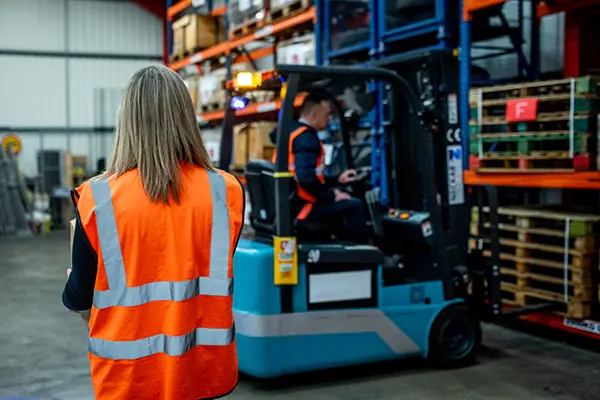
A company has been fined £146,700 after an employee suffered serious, life-changing injuries in a forklift truck accident at the company’s yard.
The incident occurred when the worker was on foot unclipping the curtain side of an articulated trailer. A colleague was operating a forklift truck nearby and as the forklift reversed, its rear nearside wheel struck the worker’s right leg, causing him to fall to the ground.
The employee sustained multiple fractures to his right foot and lower leg, along with a severe de-gloving injury.
An investigation by the Health and Safety Executive (HSE) found that the company had failed to organise its workplace to ensure the safe movement of both pedestrians and vehicles.
The HSE concluded that it was reasonably foreseeable that an employee on foot could be struck by a moving vehicle in an environment where pedestrians and drivers were working in close proximity and were focused on their respective tasks.
Best practice for reducing risk
It is vital that whenever possible businesses implement effective pedestrian and vehicle segregation wherever forklift trucks and other workplace transport are in operation.
When pedestrians and vehicles work in close proximity, the risk of collisions increases, particularly when both drivers and pedestrians are focused on their own tasks. Without suitable segregation, routine activities can quickly lead to serious injuries.
Employers should carry out risk assessments and implement measures to keep pedestrians and vehicles apart wherever possible. This may include physical barriers, designated walkways, clear signage, and effective traffic management systems.
Where physical segregation isn’t possible, assess the risks and ensure safe systems of work are in place to ensure safe distances are maintained.
Regular training, supervision, and communication of site traffic rules can also help reduce risks and ensure everyone understands how to work safely around workplace vehicles.
By taking a proactive approach to traffic management and segregation, employers can significantly reduce the likelihood of vehicle-related incidents.
You can read the full HSE article here, or view their guidance of managing vehicle movements here.