
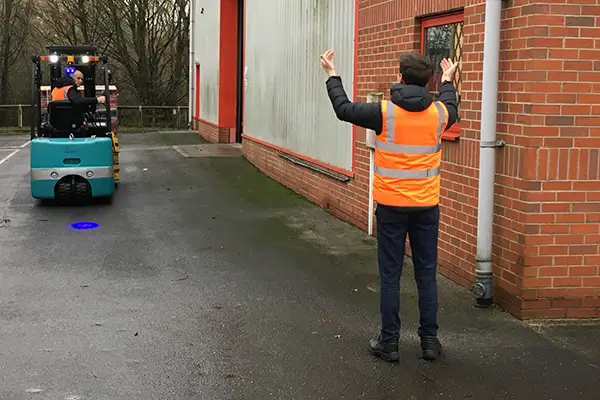
A self-employed telehandler operator has been sentenced after reversing over a colleague on a construction site, causing fatal injuries.
An investigation by the HSE found that steps had been taken to reduce the need for reversing on site, including the creation of a turning circle, which was unobstructed at the time of the incident. Despite this, the experienced telehandler operator chose to reverse the vehicle without the aid of a banksman, with tragic consequences.
The investigation also found that the operator had been using his mobile phone whilst in control of the telehandler, contrary to the site rules he had signed up to.
The operator has since been sentenced to 12 weeks’ imprisonment, suspended for 12 months, and fined £800. He was also ordered to pay £2,000 in costs.
Best practice for reducing risk
HSE publication The safe use of vehicles on construction sites HSG144 sets out the risks involved and ways of avoiding reversing on construction sites, as well as setting out a checklist of safe working practices for drivers to follow.
The most effective way of managing the risks from reversing is to avoid the need for reversing manoeuvres by providing one-way systems, turning areas and drive-through loading and unloading areas.
When planning and controlling site vehicle operations, the hierarchy of control for measures for reversing operations should be followed.
Vehicles required to reverse on site must provide adequate driver visibility. Safe systems of work must be established and followed for all reversing operations, particularly where signallers are used to manage third-party risks or assist with vehicle positioning. Warning systems provide the lowest level of protection within the hierarchy and should only be used as the sole precaution in low-risk situations.
Make sure that operators are travelling with a clear view, so that they can stay alert to any surrounding risks. If their view is obscured by the load and they cannot travel in reverse, then they should use a banksman to guide them.
Banksmen are used to co-ordinate manoeuvres that require accurate positioning and accessing of vehicles and/or workplace transport. They help oversee operations that have the potential to cause damage or injuries if not performed properly.
It’s also important to note that a banksman should be trained and competent, with clear communication established with the operator before any manoeuvre begins. They must remain in a safe position where they can be clearly seen, and the vehicle should stop immediately if the operator loses sight of them.
To read the full HSE report on this incident, click here.