
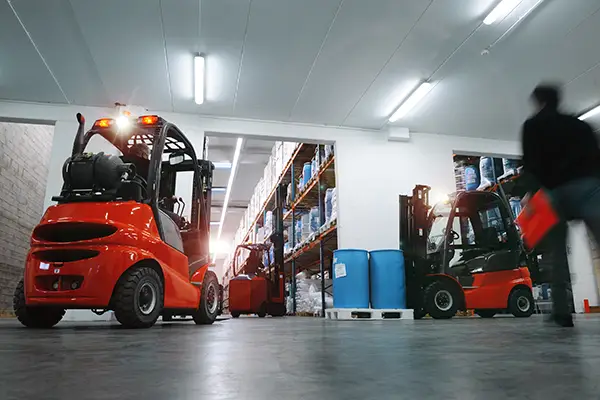
The latest RIDDOR report on work-related fatal injuries to workers in Great Britain has highlighted that being struck by a moving vehicle continues to be one of the most significant risks facing workplaces, second only to falls from height.
Newly published statistics from the HSE show that fatal accidents of this kind accounted for approximately one in five in 2025/26, reinforcing the need for employers to ensure that workplace transport is operated safely and that suitable control measures remain in place.
Data trends
Recent figures also show that Manufacturing, as well as Transportation and Storage, are amongst the industries most at risk, with the third and fourth highest total numbers of fatal injuries respectively. Amongst other vehicles, both heavily rely on materials handling equipment (MHE) so it’s vital for businesses to account for the relevant risks, prioritising proper segregation and employee awareness for the safety of everyone on site.
In relation to the total number of fatalities, IOSH have called for a renewed focus on improving occupational safety and health standards in the UK, highlighting that in recent times the overall figure has not changed significantly year on year. This trend mirrors the instances specific to being struck by a moving vehicle, with 24 occurrences recorded in the latest figures, fractionally higher than any of the 5 years prior*.
The latest data serves as an important reminder that vehicle-related accidents remain a significant risk and that targeting this should remain a priority for every organisation.
Best practice for reducing risk around moving vehicles
For those organisations with high levels of workplace transport activity, areas such as effective training, supervision and safe systems of work remain essential to reduce the risk of serious incidents.
- Employers should regularly review how vehicles and pedestrians interact on site and ensure suitable traffic management arrangements are in place. Wherever reasonably practicable, pedestrians and workplace transport should be kept apart through effective segregation measures such as physical barriers, designated walkways and clearly defined vehicle routes. Where this is not possible, other measures, safe systems of work, etc, should be put in place to reduce risk.
- Operator competence also plays a vital role in reducing risk. Initial training to required standards should be supported by regular refreshers to reinforce safe operating techniques, address poor habits that may have developed over time and ensure operators remain confident and competent.
- Managers and supervisors should also routinely monitor workplace activities to ensure safe systems of work are being followed consistently. Unsafe practices can gradually become accepted if they are not identified and corrected, increasing the likelihood of an incident occurring.
- Those who may find themselves in the vicinity of moving vehicles should be made aware of the risks. They need to understand how to navigate sites and their daily activities safely, and the importance of following these safety procedures.
- Regular reviews/risk assessments should be carried out to reflect any changes to site layout, traffic flow or operational activity. This helps ensure existing control measures remain effective and that any new hazards are identified before they result in an accident.
By combining effective training, ongoing supervision and robust traffic management arrangements, employers can significantly reduce the risk of vehicle-related incidents while helping to maintain compliance with health and safety legislation.
The latest statistics from the HSE can be accessed in full here. For further guidance on improving workplace transport safety and ensuring your operators receive the appropriate training, please don’t hesitate to contact us.
*Includes 2021/22 which was impacted by the coronavirus pandemic.